

 By Aiden Armstrong
Degenerative disc disease occurs when spinal discs gradually lose hydration, flexibility, or height, which can contribute to back pain, stiffness, and reduced mobility. Spinal decompression therapy may be considered when disc-related symptoms persist and a healthcare provider determines that conservative traction is appropriate.
What Happens When a Spinal Disc Loses Height?
Spinal discs are soft, flexible structures located between the vertebrae. They help absorb force, support spinal movement, and maintain space between the bones of the spine.
Over time, a disc may lose water content and become thinner. This process is commonly associated with aging, although previous injuries, repeated physical stress, smoking, genetics, and certain lifestyle factors may also influence how quickly disc changes develop.
As disc height decreases, the space between neighboring vertebrae may narrow. This can place additional strain on spinal joints and surrounding soft tissues. In some cases, reduced spacing may also contribute to irritation or compression of nearby nerves.
Disc degeneration does not always cause symptoms. Some people have visible degenerative changes on imaging but experience little or no discomfort. Others may develop recurring lower-back pain, stiffness, reduced flexibility, or symptoms that travel into the buttocks or legs.
What Symptoms May Be Connected to Degenerative Disc Disease?
Symptoms depend on where the affected disc is located and whether nearby joints or nerves are involved. Common concerns may include:
- Lower-back or neck pain
- Stiffness after sitting or resting
- Pain that increases with bending, lifting, or twisting
- Discomfort after prolonged standing
- Reduced spinal mobility
- Tingling or numbness in an arm or leg
- Pain extending into the buttocks or thighs
- Muscle weakness when nerve irritation is present
These symptoms can overlap with those of herniated discs, spinal stenosis, arthritis, muscle strains, and other conditions. A proper examination is therefore important before beginning decompression therapy or another form of conservative care.
How Does Spinal Decompression Work?
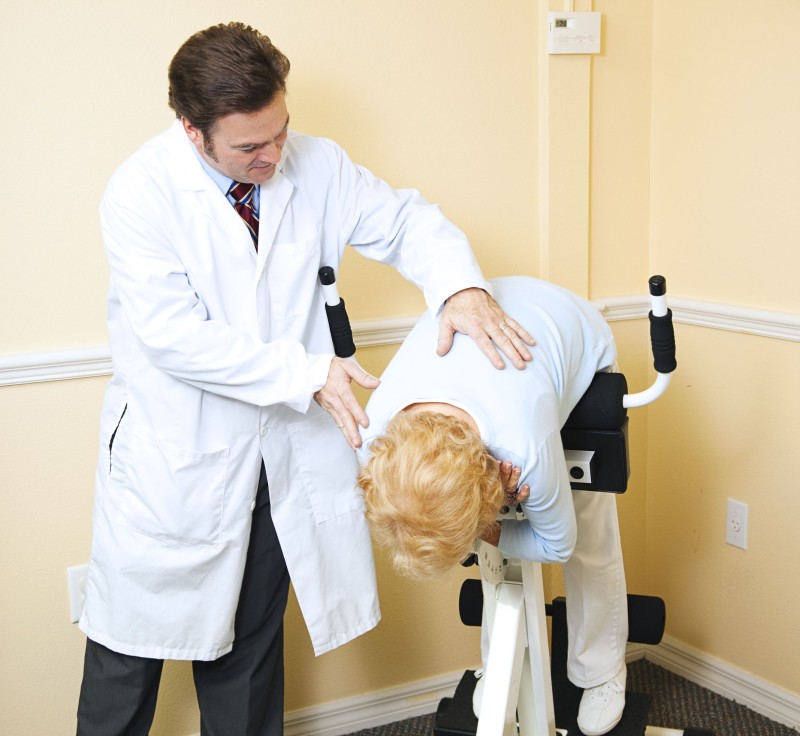
Nonsurgical decompression uses a motorized treatment table to apply controlled traction to the spine. The patient remains fully clothed while a harness or positioning system helps direct the pulling force toward the intended spinal region.
The table alternates between gentle stretching and relaxation. This process is intended to reduce mechanical pressure and temporarily create more space between spinal structures.
Depending on the patient’s condition, chiropractic decompression may be directed toward the lumbar or cervical spine. Treatment settings should be adjusted according to the person’s size, symptoms, tolerance, and examination findings.
Non surgical spinal decompression is different from surgical decompression. It does not involve an incision, removal of bone, or alteration of spinal tissue. Instead, it is a conservative therapy that may be used alongside other approaches.
When May Decompression Therapy Be Considered?
Spinal decompression may be considered when a patient has ongoing disc-related discomfort that has not improved sufficiently with rest, activity changes, or other basic conservative measures.
Possible situations include:
- Degenerative disc changes
- Reduced disc height
- Certain bulging or herniated discs
- Disc-related lower-back or neck pain
- Some forms of nerve irritation
- Recurring discomfort associated with spinal loading
- Symptoms that worsen during prolonged sitting or standing
A spine chiropractor should first evaluate the patient’s health history, symptom pattern, mobility, muscle function, and neurological findings. Existing X-rays, MRI results, or other imaging may also help determine whether decompression is suitable.
Harbor Wellness Co. provides information about Spinal Decompression and how this form of care may be incorporated into a personalized plan in Mt Pleasant.
Can Decompression Restore Lost Disc Height?
Patients should maintain realistic expectations. Decompression therapy is not generally presented as a way to permanently restore an aging disc to its original condition.
The controlled traction may temporarily reduce pressure on spinal structures and improve comfort for certain patients. It may also make movement or corrective exercise more manageable. However, results vary based on the severity of degeneration, overall health, activity level, and other structural conditions.
The presence of disc height loss alone does not establish that decompression will be effective. Treatment decisions should be based on symptoms and clinical findings rather than imaging language by itself.
What Other Care May Be Used With Chiropractic Decompression?
Decompression is often one part of a broader conservative care plan rather than a complete solution by itself. Depending on the examination, supportive care may include:
- Chiropractic adjustments
- Mobility exercises
- Core stability work
- Posture guidance
- Activity modifications
- Ergonomic recommendations
- Soft-tissue therapy
- Gradual strengthening
A chiropractic adjustment and spinal decompression serve different purposes. Adjustments are generally intended to address joint movement and mechanics, while decompression applies controlled traction to the spine. A provider may recommend one approach or combine them when appropriate.
Patients may also be encouraged to modify lifting habits, avoid prolonged inactivity, and gradually return to tolerable movement.
When Is Spinal Decompression Not Appropriate?
Decompression is not suitable for every person. Certain fractures, severe osteoporosis, spinal instability, tumors, infections, advanced neurological problems, or other medical conditions may make traction inappropriate.
Patients should seek prompt medical attention for progressive weakness, loss of bowel or bladder control, numbness around the groin, fever, unexplained weight loss, or severe pain following a major injury.
A qualified provider should review these concerns before starting care. Conservative treatment should not delay necessary medical evaluation when serious nerve compression or another urgent condition is suspected.
What Should Mt Pleasant Patients Consider Before Treatment?
Degenerative disc disease is common, but the symptoms and treatment needs vary from person to person. Mt Pleasant patients considering decompression should begin with an evaluation that identifies the likely source of their symptoms and determines whether traction fits their condition.
Spinal decompression therapy may support comfort and mobility for selected patients, but it should be recommended based on examination findings, health history, and realistic treatment goals. An individualized plan can help patients understand how decompression, movement, and other conservative strategies may work together.