

 By Aiden Armstrong
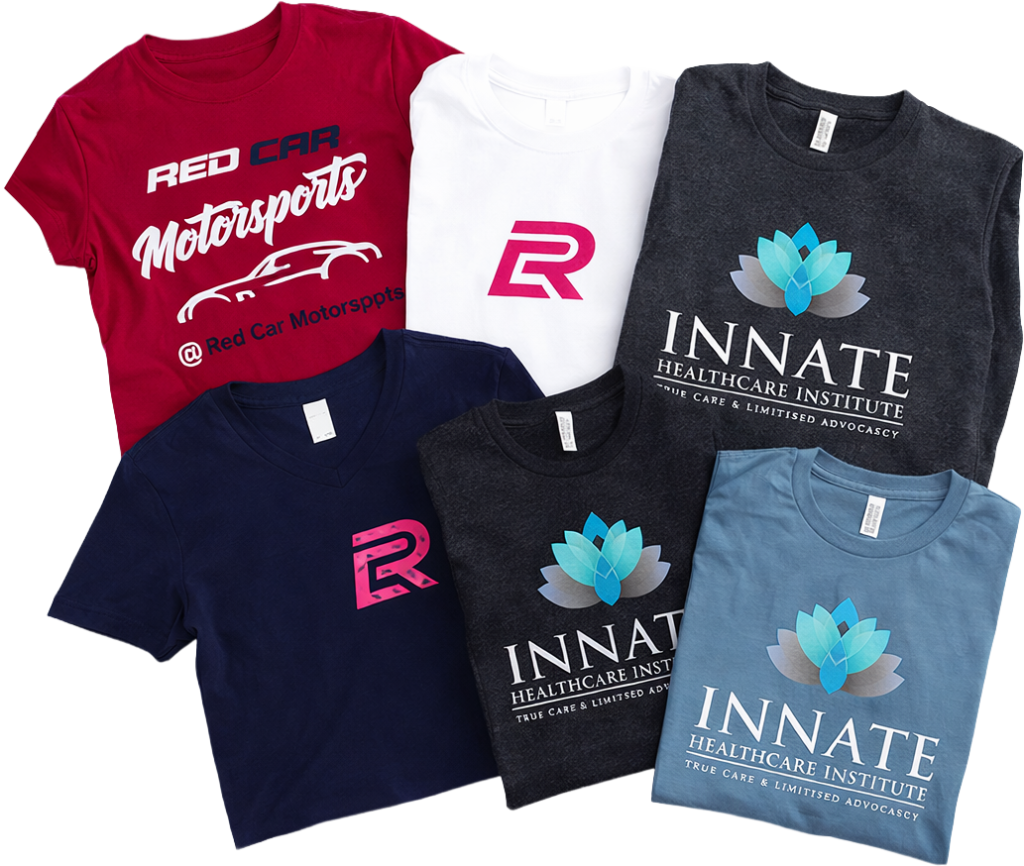
One design can work across t-shirts, hoodies, and jackets when its dimensions, placement, colors, and level of detail are adjusted for each garment. The logo or graphic can remain consistent while the production layout changes to account for pockets, zippers, seams, fabric thickness, and available print space.
Businesses and organizations in Phoenix, AZ, often want coordinated apparel that includes more than one garment type. Maintaining the same visual identity across those pieces requires planning beyond placing an identical file in the same position on every item.
Why Does the Garment Type Affect the Design?
T-shirts, hoodies, and jackets have different shapes and construction features. A basic t-shirt usually offers a relatively flat front and back, while a hoodie may include a kangaroo pocket, drawstrings, thick seams, or a zipper. Jackets may have panels, linings, pockets, closures, and textured materials.
These differences affect where a screen can make even contact with the fabric. Screen printing services generally produce the most consistent results when artwork sits within a smooth, uninterrupted area.
A centered design that fits comfortably on a t-shirt may overlap the pocket of a pullover hoodie. The same design could also cross a zipper or seam on a jacket. Rather than forcing one placement onto every garment, the layout should be adapted while preserving the recognizable artwork.
Should the Artwork Use the Same Dimensions?
Using the same exact dimensions is not always practical. The appropriate print size depends on the garment’s printable area, the shape of the design, and the smallest size included in the order.
T-shirts often provide enough space for a broad centered-front or full-back design. Hoodies may require a shorter front print so the artwork stays above the pocket. Jackets can have an even smaller usable area because of zippers, chest pockets, panels, or interior construction.
The garment size range must also be considered. A design that appears balanced on an extra-large garment may look crowded on a small one. A clothing printing shop may recommend one practical size that works across the full order or separate dimensions for substantially different garment types.
Changing the dimensions does not necessarily change the brand identity. The artwork can remain visually consistent as long as its proportions, colors, typography, and key elements are preserved.
How Should Print Placement Be Adjusted?
Placement should be selected according to the construction of each item. Common options include the centered front, left chest, full back, upper back, and sleeve.
A t-shirt may support a large front graphic, while a pullover hoodie may require that design to sit higher above the kangaroo pocket. On a zip-up hoodie or jacket, a left-chest print may be more suitable than a design that crosses the zipper.
Back placement often provides the most consistent option across multiple garment types. However, hoods can partially cover upper-back artwork, especially when the garment is not being worn. A design may need to sit lower so it remains visible beneath the hood.
Sleeve prints can provide another coordinated element, but the available width varies considerably. Simple wording or a compact mark generally fits more easily than wide, detailed artwork.
Can the Same Artwork File Be Used?
A master artwork file can serve as the basis for all garment versions, but separate production layouts may be needed. Each layout should identify the garment, print location, dimensions, colors, and orientation.
Businesses should provide high-quality approved artwork rather than website images, screenshots, or files copied from social media. Low-resolution artwork may appear acceptable on a screen but lack the clarity required for larger apparel printing.
For professional Custom Clothing Printing, the artwork should be reviewed at its intended production size. Thin lines, small text, and closely spaced details may require adjustment when the design is reduced for a chest or sleeve placement.
Separate file names can also prevent confusion. For example, a company might maintain approved versions for full-back, left-chest, and sleeve printing while keeping the same core design.
How Do Fabric and Garment Color Affect the Result?
Different garments may use cotton, polyester, fleece, blended materials, or performance fabrics. Surface texture and fabric thickness can influence how fine details and ink colors appear.
A smooth t-shirt may reproduce small details differently from a thick fleece hoodie or textured jacket. The design may need simplified lines or slightly larger lettering to remain clear across all items.
Garment color is equally important. A dark logo intended for a light shirt may not remain visible on a black jacket. Businesses may need approved light and dark versions of the artwork.
Light-colored ink printed on dark apparel may also require an underbase to support visibility. Although the logo remains consistent, the production method can vary according to the fabric and garment color.
How Can Front and Back Designs Stay Coordinated?
When multiple print locations are used, each one should have a defined purpose. A small chest logo can provide immediate identification, while a larger back design communicates the primary message.
The same hierarchy can be maintained across shirts, hoodies, and jackets even when the dimensions change. Consistency comes from repeating the approved logo treatment, colors, typography, and general arrangement.
Adding too many competing elements can make the apparel feel disconnected. Businesses should identify which design is primary and which details are secondary before approving custom apparel printing.
What Should Be Reviewed Before Production?
Every garment type should have its own mockup or approval. The review should confirm:
- Exact garment style and color
- Approved artwork version
- Print dimensions
- Front, back, chest, or sleeve placement
- Ink colors
- Size range
- Distance from pockets, zippers, seams, and hoods
The mockup should not be treated only as a spelling check. It should also show whether the design appears balanced and readable on that specific garment.
PHX Screen Printing works with businesses and organizations in Phoenix, AZ, that need coordinated apparel across multiple garment styles. Their production planning can account for differences in construction while maintaining a unified visual identity.
One design does not need to appear at the exact same size or position on every item. Thoughtful adjustments allow t-shirts, hoodies, and jackets to look connected while respecting the practical limits of each garment.
